Salesforce Agentforce Multi-Agent Orchestration Review: Summer '26 Puts Teams of AI Agents Into Production
Salesforce Agentforce Multi-Agent Orchestration Review: Summer '26 Puts Teams of AI Agents Into Production
📖 What Is Salesforce Agentforce Multi-Agent Orchestration?
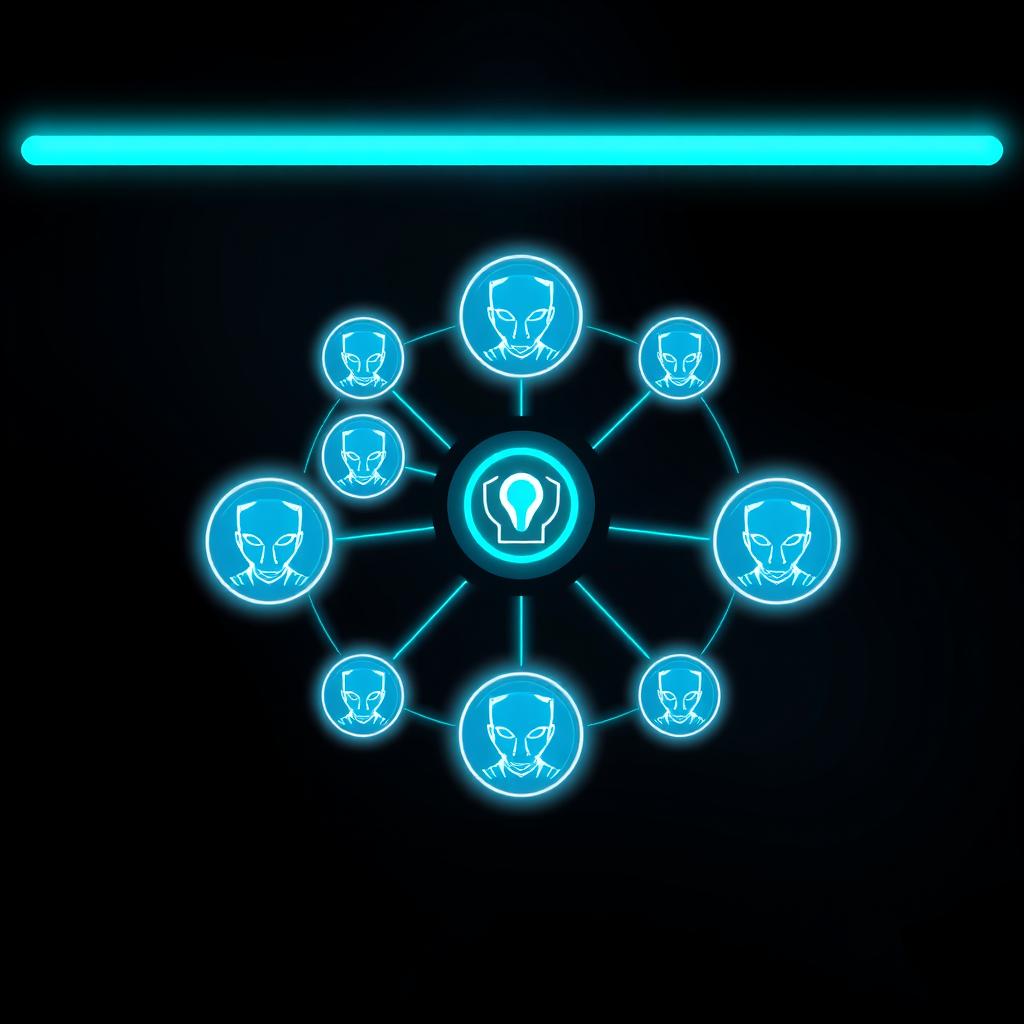
Salesforce Agentforce Multi-Agent Orchestration is a production platform for building teams of specialized AI agents that collaborate to solve complex business problems. Released to general availability on June 15, 2026 as the headline feature of Salesforce's Summer '26 release, it marks the moment enterprise CRM moved from single-chatbot deployments to coordinated multi-agent workflows.
A primary agent serves as a single entry point, receiving user requests and routing them to the best-fit specialist agent — a billing agent, a scheduling agent, a product-support agent — using the Atlas Reasoning Engine 3.0. Shared context persists across channels so a customer who starts on chat and follows up by email doesn't repeat themselves.
📊 At a Glance & ✅ Pros & Cons
| Feature | Agentforce Multi-Agent | CrewAI | LangGraph |
|---|---|---|---|
| Category | Enterprise Multi-Agent Platform | Multi-Agent Framework | Multi-Agent Framework |
| Pricing | $2+/conversation | Free | Free |
| Deployment | Cloud (Salesforce) | Cloud + Local | Cloud + Local |
| Multi-Agent Orchestration | ✅ Native (GA) | ✅ Native | ✅ Native |
| A2A Protocol | ✅ Yes | ❌ No | ❌ No |
| MCP Support | ✅ Yes | ⚠️ Via plugins | ✅ Via LangChain |
| Pre-built Agents | 50+ (IT Service Pack) | Community templates | LangChain Hub |
| Self-Hostable | ❌ No | ✅ Yes | ✅ Yes |
| Target Audience | Enterprise CRM teams | Developers | ML engineers |
✅ What It Does Best
- Production multi-agent orchestration — first major CRM platform to ship GA multi-agent coordination
- Atlas 3.0 reasoning — dynamic routing reads agent descriptions instead of hard-coded decision trees
- A2A + MCP protocols — interop with non-Salesforce agents and external tool ecosystems
- IT Service Domain Pack — 50+ pre-built specialist agents for rapid deployment
- Process Compliance Navigator — real-time compliance intercept for regulated industries
❌ Where It Falls Short
- Salesforce lock-in — best features require the full Salesforce stack
- Per-conversation pricing — $2+/conversation can scale unpredictably
- Description-driven routing — vague agent descriptions cause cascading failures
- Seam problem — faithfully amplifies existing data and process defects
- Deployment complexity — multi-agent rollout still takes 3–6 months for most orgs
Best multi-agent framework for rapid prototyping. Free, open-source, and developer-friendly. Lacks CRM integration and enterprise compliance tooling.
LangGraphAdvanced agent orchestration framework with LangChain ecosystem. Free, self-hostable. Steeper learning curve but more flexible than Salesforce.
OpenAI Agents SDKOpenAI's agent-building toolkit. Free tier, cloud-native, with strong model support. Less enterprise CRM integration than Salesforce.
✨ Capabilities & Agentic Deep Dive
Atlas Reasoning Engine 3.0
The brain behind the orchestration. Atlas 3.0 interprets incoming requests, determines what data and actions the task requires, identifies which agent or tool is responsible, and reassembles results into a single answer. Critically, it does not use fixed decision trees — instead it inspects each registered subagent's description, instructions, and available actions to decide routing. This means an agent's description is a load-bearing routing input, not documentation. Describe vaguely and the orchestrator routes badly.
Agent2Agent (A2A) Protocol
A2A lets a primary Agentforce agent securely delegate work to third-party agents on other platforms. Google introduced the standard in April 2025 with 50+ partners including Salesforce; it's now stewarded by the Linux Foundation. Salesforce contributed the "Agent Card" concept used for capability discovery. Together with MCP, A2A creates an interoperability layer that lets coordinated agents span vendors rather than living in one silo.
Tableau MCP Integration
Summer '26 ships Tableau support via the Model Context Protocol, letting Agentforce agents query Tableau's analytics engine directly. Answers are grounded in real business data while staying protected by the Agentforce Trust Layer. MCP is the open standard Anthropic introduced in November 2024; Salesforce workflows can also be exposed as MCP tools to other systems.
IT Service Domain Pack
50+ pre-built AI agents covering IT service management workflows, available in Slack, Microsoft Teams, and the IT Service Desk. These agents detect intent and resolve employee requests across roles — password resets, software provisioning, access requests. Designed to reduce setup time from months to days for standard enterprise IT processes.
Process Compliance Navigator
Monitors live workflows in real time and intercepts non-compliant actions before they complete. For finance, legal, and healthcare businesses under regulatory pressure, this turns AI agents from a productivity tool into a compliance tool. It signals that regulated industries are now the primary growth market for enterprise AI agents.
🔬 AI Performance Analysis
🦾 Ease of Use
Setting up a single Agentforce agent is straightforward via the Salesforce admin interface. Multi-agent orchestration requires configuring routing rules, writing precise agent descriptions, and auditing underlying CRM data. The Agentforce Self-Service Help Agent can be configured in 6 clicks, but a full multi-agent rollout still takes 3–6 months for most organizations. The IT Service Domain Pack helps, but this is not a plug-and-play product. Salesforce customers know the drill, but new teams face a significant learning curve.
⚙️ Features
This is where Agentforce shines. Multi-agent orchestration with Atlas 3.0, A2A protocol for cross-platform interop, MCP for tool connectivity, 50+ pre-built IT agents, Process Compliance Navigator, Slack integration, real-time data via Tableau — the feature list is comprehensive. No other enterprise CRM platform ships this level of agent infrastructure in GA. The feature depth justifies the enterprise price tag for organizations that can use it.
🚀 Performance
Salesforce logged 2.4 billion agentic work units across Agentforce and Slack — a number no competitor has matched. Atlas 3.0 handles routing at scale, and the Trust Layer ensures data security. The per-conversation model means performance is predictable from a cost perspective. However, performance depends heavily on configuration quality — a badly described agent routes poorly regardless of underlying infrastructure. The A2A and MCP protocol support adds latency for cross-platform calls but enables workflows previously impossible.
📚 Documentation
Salesforce's Summer '26 release notes are comprehensive, covering API v67.0, multi-agent routing, Atlas 3.0, and MCP integration. The Trailhead learning platform provides hands-on modules. However, navigating Salesforce's doc ecosystem requires familiarity with its structure. Documentation on the seam problem and best practices for agent description writing is thin — most coverage comes from third-party analysts and consulting firms, not Salesforce itself.
🎯 Support
Salesforce enterprise support is reliable for paying customers, with SLAs and dedicated TAMs for large accounts. The partner ecosystem (Sirocco Group, Digital Applied, and others) provides consulting for multi-agent deployments. Community resources are extensive via Trailblazer groups and Salesforce+ content. However, multi-agent orchestration is new enough that even Salesforce's support team is learning alongside customers — specialized troubleshooting for routing issues may require escalation.
🎯 Ideal Use Cases
✅ Best For
| ❌ Not Ideal For
|
Agentforce starts at $2/conversation on the consumption model, with Flex Credits and per-user licensing options. The Summer '26 release is included in existing Agentforce subscriptions. For mid-market organizations, real Year 1 costs run $150K–$600K including setup, integration, and data auditing.
Quick start: Audit your CRM data → write precise agent descriptions → configure your primary agent → register specialist agents in Atlas 3.0.
| ❓ FAQ | |
|---|---|
| What is Salesforce Agentforce multi-agent orchestration? | It's a GA capability (since June 15, 2026) that lets you build teams of specialist AI agents coordinated by a primary agent. The primary agent routes requests to the best-fit specialist using the Atlas 3.0 reasoning engine, holding shared context so users never repeat themselves. |
| How does Atlas 3.0 route tasks between agents? | Atlas reads each subagent's description, instructions, and available actions to decide routing. There are no fixed decision trees — the quality of routing depends directly on how precisely each agent is described. Vague descriptions produce bad routing. |
| Does Agentforce work with non-Salesforce agents? | Yes, through the Agent-to-Agent (A2A) open protocol. A2A lets a primary Agentforce agent delegate work to third-party agents on other platforms. A2A was launched by Google in April 2025 and is now stewarded by the Linux Foundation. |
| What is the 'seam problem' in multi-agent orchestration? | When you distribute work across specialist agents that faithfully execute existing automation, the system amplifies whatever is already broken. A lead-routing agent can inherit an assignment rule for a team that no longer exists. A data and process audit before deployment is essential — and most buyers skip it. |
| How fast is Salesforce Agentforce growing? | Agentforce reached $800M ARR in fiscal Q4 2026 (up 169% YoY), with 29,000 deals and 2.4 billion agentic work units logged. It took roughly 18 months from launch to hit this scale. |
| 📖 Related Reads | |
|---|---|
| CrewAI Review 2026 | Best open-source multi-agent framework for rapid prototyping and development. |
| LangGraph Review 2026 | LangChain's advanced agent orchestration framework for production agent workflows. |
| OpenAI Agents SDK Review 2026 | OpenAI's toolkit for building and deploying AI agents with native model support. |
| 📚 Verification & Citations | |
|---|---|
| Tech Times — Agentforce Multi-Agent Hits GA | Salesforce Summer '26 release deep dive: Atlas 3.0, A2A protocol, seam problem analysis. Accessed June 2026. |
| Enterprise DNA — $800M ARR Analysis | Revenue figures, 29,000 deals, 2.4B agentic work units, and market implications. Accessed June 2026. |
| Salesforce Summer '26 Press Release | Official Salesforce announcement with full feature list and availability dates. Accessed June 2026. |
Salesforce graduated multi-agent orchestration from beta to general availability on June 15, 2026. The Summer '26 release includes Atlas 3.0, A2A protocol support, Tableau MCP integration, IT Service Domain Pack (50+ agents), Process Compliance Navigator, and Slack First Sales agents. Agentforce ARR reached $800M (up 169% YoY) with 29,000 deals closed. The release is production-eligible under API v67.0.
Salesforce acquired Intercom's AI customer service platform Fin for $3.6 billion on the same day Summer '26 went live. The acquisition strengthens Salesforce's customer service AI stack and adds Fin's conversational AI capabilities to the Agentforce ecosystem.
Salesforce previewed the Summer '26 release with 10 headline features including multi-agent orchestration, Agentforce Self-Service (6-click Help Agent), IT Service Domain Pack, and the Momentum conversation capture tool. The preview positioned the release as the bridge from AI experimentation to scaled impact.
- June 28, 2026: Initial v4 canonical review — Salesforce Summer '26 multi-agent orchestration GA analysis.
📖 Related Reads
- CodeIntel Log — code quality, debugging, and software engineering benchmarks
- ToolBrain — tool reviews, LLM comparisons, and AI workflow guides
- NoCode Insider — AI workflow automation with no-code tools, agents, and APIs
Cross-links automatically generated from None.
← Back to all posts