Langflow Review 2026: The 150K-Star Visual AI Builder for Agentic Workflows & RAG

What Is Langflow?
Langflow is an open-source visual AI workflow builder that lets you design, build, and deploy agentic applications, RAG pipelines, and MCP servers through a drag-and-drop interface — without writing boilerplate code. Created by the team behind DataStax (now backed by IBM) and licensed under MIT, Langflow has grown to over 150,000 GitHub stars by giving developers a visual canvas that maps directly to LangChain's component model [source].
Unlike all-in-one platforms like Dify or n8n that abstract away the underlying framework, Langflow exposes LangChain concepts directly as visual components. Every node in the canvas corresponds to a LangChain primitive — LLM, prompt template, output parser, tool, memory, vector store retriever — giving you granular control over how your AI workflow behaves. The tradeoff is that you need some understanding of LangChain to build complex flows, but the payoff is unmatched flexibility for developers who want to see exactly what their pipeline is doing at each step.
At a Glance & Pros & Cons
| Feature | Langflow | Dify | n8n |
|---|---|---|---|
| Category | AI Workflow Automation | AI Workflow Automation | AI Workflow Automation |
| Pricing | Free / Cloud (usage-based) [source] | Free / $59/mo | Free / $20/mo |
| License | ✅ MIT (self-hosted) | ✅ Apache 2.0 | ✅ Sustainable Use License |
| Visual Builder | ✅ Drag-and-drop + Python customization | ✅ Drag-and-drop nodes | ✅ Node-based automation |
| MCP Server Export | ✅ Native export | ❌ Not available | ❌ Not available |
| Built-in RAG | ✅ Component-based RAG | ✅ Native knowledge base | ❌ External only |
| Multi-Model | ✅ 15+ providers | ✅ 10+ providers | ✅ 5+ providers |
| GitHub Stars | ⭐ 150K+ | ⭐ 146K+ | ⭐ 55K+ |
What It Does Best
- Visual builder with Python access — Drag-and-drop workflow editor that lets you customize any component with Python source code access
- MCP server export — Export flows as Model Context Protocol servers, enabling direct integration with Claude Code, Codex CLI, and other MCP-native tools
- Multi-model and multi-vector store — Supports all major LLMs and vector databases out of the box
- IBM-backed ecosystem — Maintained by DataStax/IBM with enterprise-grade documentation and watsonx integration
- Community and plugin ecosystem — Hundreds of pre-built components and 150,000+ GitHub star community
Where It Falls Short
- Steep learning curve for complex flows — Multi-agent RAG workflows require understanding LangChain concepts
- Self-hosted resource requirements — Docker Compose deployment needs 4GB+ RAM
- Observability is basic — Debugging trails dedicated tools like Langfuse or Braintrust
- Cloud pricing is opaque — DataStax managed cloud pricing requires a sales call
- Less production polish than Dify — Fewer built-in deployment, monitoring, and RBAC features
More polished all-in-one AI app platform with built-in RAG, monitoring, and team collaboration. Better for teams that want a turnkey production experience.
n8nBroader workflow automation with 400+ integrations for general business processes. Better for cross-platform automation than pure AI app building.
Open-source visual LangChain builder similar to Langflow. Simpler learning curve but less active community and fewer enterprise features.
Capabilities & Agentic Deep Dive
Visual Workflow Canvas with Python Access
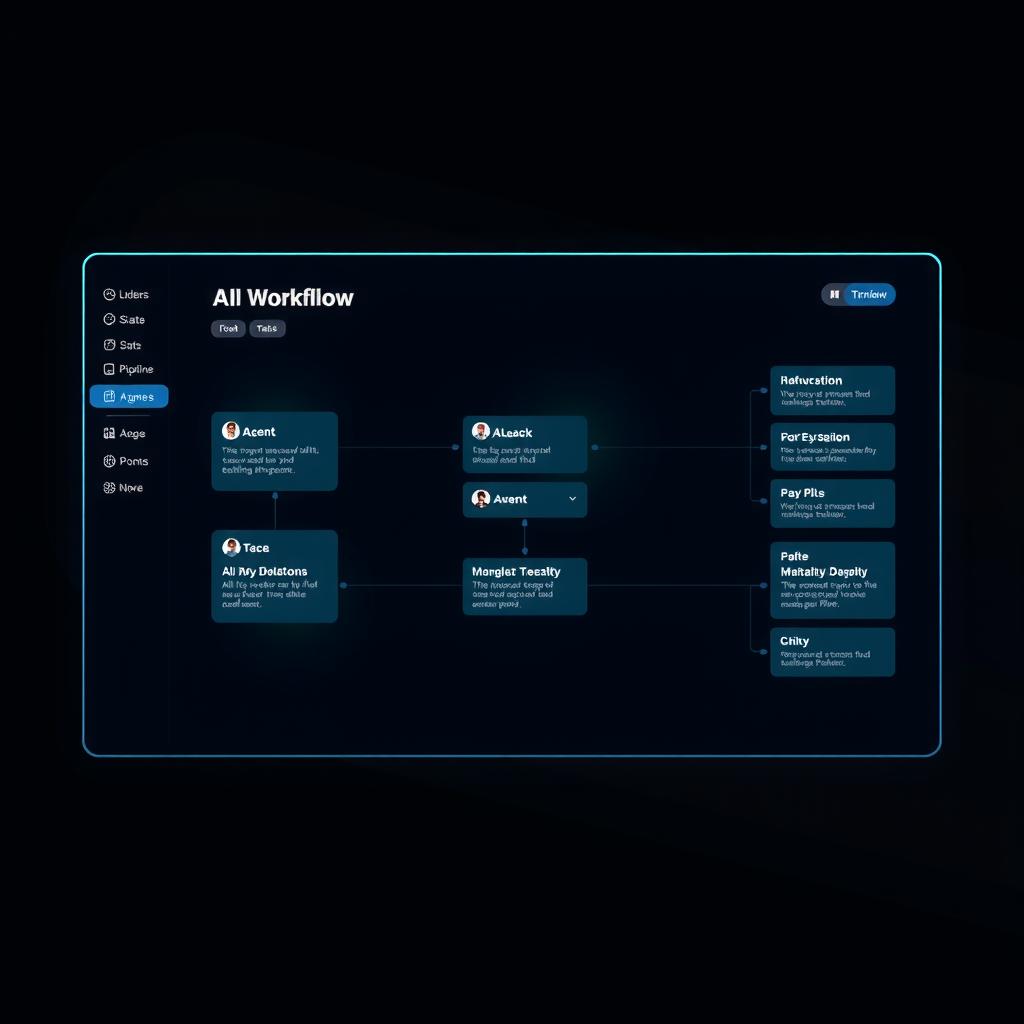
Langflow's canvas is the most LangChain-native visual builder available. Every component on the canvas — LLM, prompt, retriever, memory, tool, parser, chain — maps directly to a LangChain class. You drag nodes, connect their inputs and outputs, and the flow builds the LangChain pipeline in real time. What sets Langflow apart is that you can click into any component and edit its Python source code directly. Need a custom prompt template with complex formatting? Open the code panel, modify the Python, and the component updates immediately. This bridges the gap between visual builders (which are fast but inflexible) and code-first frameworks (which are flexible but slow to iterate).
MCP Server Export: Build Once, Use Anywhere
Langflow's most distinctive feature is the ability to export any flow as a Model Context Protocol (MCP) server. Build a RAG pipeline that searches your company docs, adds web search for context, and summarizes results — then export it as an MCP server. Claude Code, Codex CLI, and any MCP-compatible client can now call your flow as a tool. This is a game-changer for teams that use CLI coding agents. Instead of rebuilding the same retrieval logic inside every agent, you build it once in Langflow and expose it as an MCP tool that all agents can share [source].
Multi-Provider Model Management
Langflow supports 15+ LLM providers including all major cloud APIs and local models via Ollama. You can mix providers within a single flow — use Claude 4 Opus for the reasoning-heavy node and Gemini 2.5 Flash for faster, cheaper subtasks. The component marketplace includes 300+ pre-built connectors for vector stores, document loaders, embeddings, and output parsers, making it easy to compose complex pipelines without writing glue code. The vector store integration is particularly strong, with native support for Cassandra, Pinecone, Qdrant, Weaviate, Milvus, Chroma, and Supabase pgvector [source].
Agentic Workflows with Tool-Calling
Langflow supports ReAct and function-calling agent patterns through its agent component. You can define tools (web search, API calls, custom Python functions, database queries) and connect them to an agent node that reasons about which tool to call and when. The visual flow makes the agent's decision path visible — you can trace which tool was called, what input was passed, and what the tool returned. This transparency is a significant advantage for debugging complex multi-step agent workflows. The upcoming v1.11 release promises enhanced parallel tool execution and streaming agent responses.
AI Performance Analysis
Ease of Use
Langflow is exceptionally easy to start with for simple workflows. Building a basic chatbot or single-step LLM call takes minutes — drag an LLM node, connect a prompt, hit run. The visual canvas makes the pipeline obvious, and inline Python access lets you customize without leaving the UI. The learning curve steepens for complex flows: multi-agent RAG pipelines with conditional branching, custom tools, and MCP export require understanding LangChain concepts like chains, retrievers, and output parsers. Beginners building AI apps may find Dify's simpler abstractions easier; developers who already know LangChain will feel right at home.
Features
Langflow's feature set is comprehensive: visual workflow builder with Python customization, MCP server export (unique in this category), 300+ pre-built components, 15+ LLM providers, 8+ vector stores, tool-calling agents, memory management, API publishing, and a component marketplace. The MCP export feature alone justifies choosing Langflow over alternatives if you use CLI coding agents. The main feature gap is built-in monitoring and observability — there is no native guardrails, evaluation, or latency tracking. You need to integrate Langfuse or similar tools separately for production observability.
Performance
Langflow's platform performance is solid. The UI remains responsive even with complex flows containing 20+ nodes. Workflow execution overhead is minimal — Langflow adds roughly 50-100ms of orchestration latency per step, which is negligible compared to the 1-5 second LLM call time. The self-hosted version runs well on standard infrastructure (4GB RAM, 2 CPU cores handles moderate production loads). The real bottleneck is always the underlying model API. Docker Compose startup takes about 30-60 seconds on first run, and the containerized deployment is straightforward for anyone familiar with Docker.
Documentation
Langflow's documentation is well-structured with getting-started guides, component API references, deployment instructions, and video tutorials. The IBM backing shows in the documentation quality — it follows enterprise-grade patterns with versioned docs, changelogs, and clear setup guides for Docker Compose, Kubernetes, and cloud deployments. The docs cover both the open-source version and DataStax managed cloud. Coverage for the MCP server export feature is solid with worked examples. The one gap is that advanced tutorial content (multi-agent orchestration, custom tool building) is thinner than the community on Discord or GitHub discussions provides.
Support
Langflow has one of the most active open-source communities in the AI builder space, with 150,000+ GitHub stars, a busy Discord server (3,000+ members), and active GitHub issue triage. The core maintainers at DataStax/IBM respond to critical issues within days. The cloud version includes enterprise support through DataStax. However, self-hosted users rely entirely on community support — there is no free tier email support or SLA. The MIT license means there's no formal commercial support path beyond DataStax's cloud offering. For teams needing guaranteed response times, the DataStax managed cloud is the only option, and its pricing requires a sales conversation.
Ideal Use Cases
Best For
|
Not Ideal For
|
Self-hosted Langflow is free under MIT license — you provide the server (Docker Compose) and connect your own LLM API keys. DataStax managed cloud is available with usage-based pricing for teams that don't want to manage infrastructure.
Quick start: docker compose up from the Langflow repo → open localhost:7860 → drag your first LLM node → connect and run in minutes.
| FAQ | |
|---|---|
| Is Langflow completely free? | Langflow is open-source under the MIT license. Self-hosting via Docker Compose is completely free. You only pay for the server infrastructure and the LLM API keys you connect. DataStax offers a managed cloud version with usage-based pricing — costs depend on workflow complexity and throughput. |
| How does Langflow compare to Dify? | Both are visual AI workflow builders, but they target different sweet spots. Langflow excels at granular LangChain-level control with Python component customization and MCP server export. Dify has a more polished all-in-one experience with built-in RAG, monitoring, and team collaboration. Choose Langflow if you want low-level control and MCP integration; choose Dify if you want a complete production platform. |
| What is MCP server export and why does it matter? | Langflow can export any flow as a Model Context Protocol (MCP) server. This means you can build a visual workflow — like a RAG pipeline with web search and document analysis — and make it available as an MCP tool that Claude Code, Codex CLI, or any MCP client can call directly. It bridges visual builder workflows into CLI coding agents. |
| Can Langflow be self-hosted? | Yes. Langflow self-hosts via Docker Compose with a single command. You can connect any LLM provider (OpenAI, Anthropic, Google, Ollama, etc.) and any vector store. The self-hosted version includes all features of the cloud version, making it a strong option for data-sensitive deployments. |
| What models and vector stores does Langflow support? | Langflow supports OpenAI (GPT-4, GPT-4o), Anthropic (Claude 4, Claude 3.5), Google (Gemini 2.5 Pro/Flash), AWS Bedrock, Azure OpenAI, Ollama (local models), and any OpenAI-compatible endpoint. Vector stores include Cassandra, Pinecone, Qdrant, Weaviate, Milvus, Chroma, and Supabase pgvector. |
| Related Reads | |
|---|---|
| Dify Review 2026 | The strongest all-in-one alternative to Langflow. More polished for production deployment with built-in RAG and team collaboration. |
| n8n Review 2026 | Open-source workflow automation with 400+ integrations. Better for general business process automation than pure AI app building. |
| Build AI Agents with Langflow (NiteAgent) | Step-by-step guide to building production AI agents using Langflow's visual workflow builder. |
| Verification & Citations | |
|---|---|
| https://langflow.org | Langflow Official Website — product features, documentation, and community. Accessed July 2026. |
| https://github.com/langflow-ai/langflow | Langflow GitHub Repository — source code, releases, and issue tracker. Accessed July 2026. |
| https://docs.langflow.org | Langflow Documentation — component reference, deployment guides, and API docs. Accessed July 2026. |
| https://docs.langflow.org/mcp-server | MCP Server Export Documentation — guide for exporting Langflow flows as MCP servers. Accessed July 2026. |
| https://www.star-history.com/langflow-ai/langflow | Star History — Langflow GitHub star count tracking. Accessed July 2026. |
Langflow v1.10 shipped improved MCP server export with support for streaming responses, multiple tools per server, and better error handling. The release also added 15 new component templates for common agentic patterns including web research, document Q&A, and multi-step reasoning [source].
Langflow surpassed 150,000 GitHub stars, ranking it as one of the top 60 most-starred projects on GitHub globally. The project continues to see rapid growth as visual AI builder adoption accelerates among development teams [source].
IBM completed its acquisition of DataStax, bringing Langflow into the watsonx AI platform ecosystem. The acquisition promised deeper integration with watsonx Orchestrate and IBM's enterprise AI tooling, along with expanded enterprise support options [source].
Langflow launched a component marketplace with 300+ pre-built components contributed by the community. The marketplace includes connectors for vector databases, document loaders, web search tools, and custom API integrations, dramatically expanding the platform's out-of-the-box capabilities [source].
- July 3, 2026: Initial v4 canonical review published with full 14-section structure.