Komo AI (Komo Search) Review 2026 — AI-Powered Search Engine
At a Glance
Komo AI (accessible via komo.ai) began life as a standalone AI-powered search engine and has since grown into a dual-platform product that also includes a B2B sales automation suite called the AI Revenue Engine. This review focuses on Komo Search — the original generative AI search tool that delivers private, ad-free, conversational search with verified citations, customizable data corpora, and multi-model support.
| Dimension | Score |
|---|---|
| Ease of Use | 8.0 / 10 |
| Features | 7.5 / 10 |
| Performance | 6.5 / 10 |
| Documentation | 6.0 / 10 |
| Support | 6.0 / 10 |
| Overall | 6.8 / 10 |
What Is Komo AI?
Komo Search is a generative AI search engine that synthesizes answers from multiple web sources rather than serving a traditional list of links. It was developed by a Bay Area startup founded in 2022 (Grokipedia). The product offers three core interaction modes:
- Chat — conversational Q&A with real-time web grounding and source links.
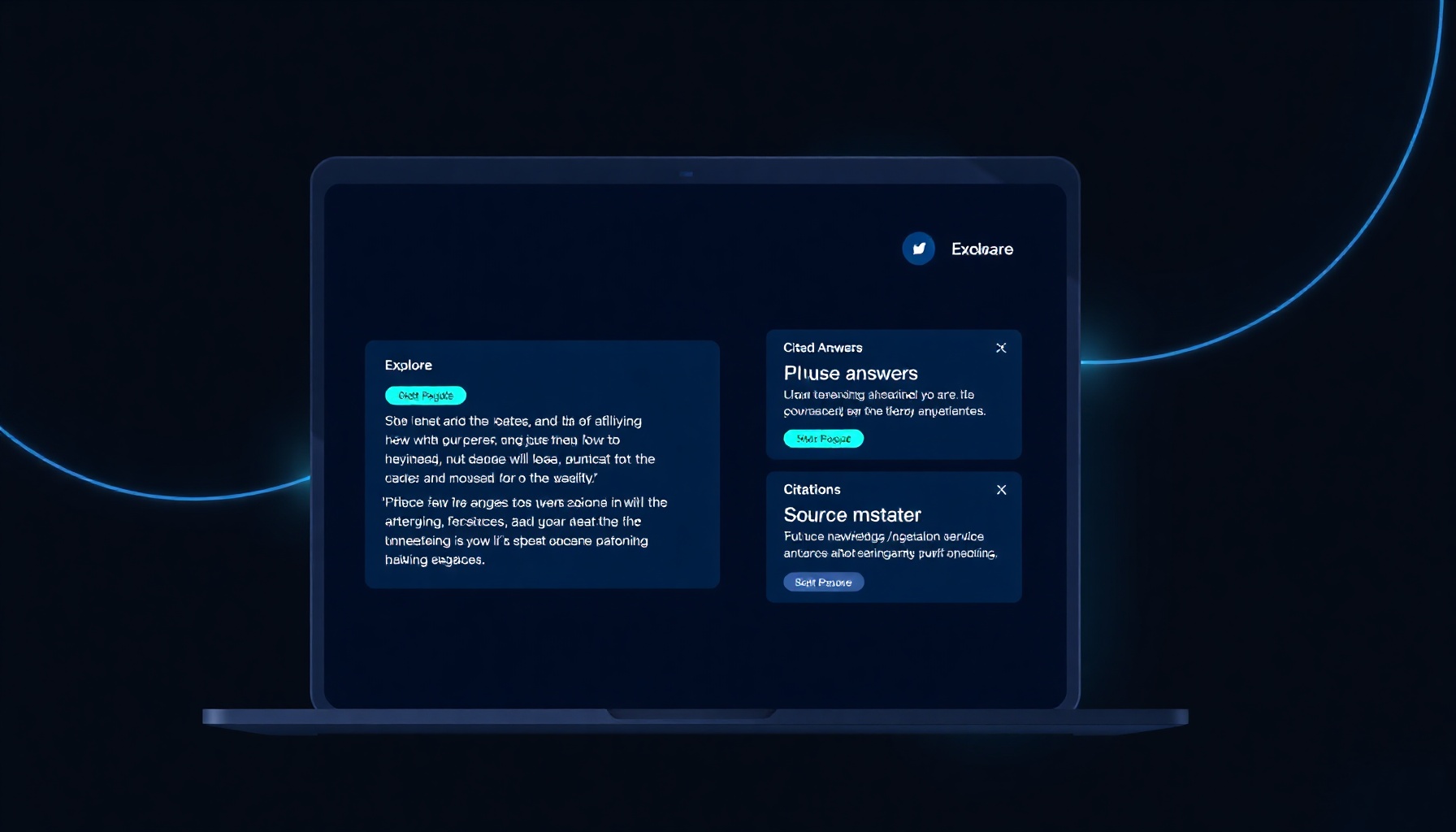
- Explore — trend discovery across social platforms and community discussions.
- Search — quick, cited answers with a bibliography-style reference panel.
In addition, users can choose from six Data Corpora (Academic, Blog, News, Social, Video, Web) to narrow retrieval before synthesis, and select from multiple Personas (Copy Writer, Equity Researcher, Explainer, Planner) to tailor response style (AIGearBase).
Komo Search also offers two research depths: Quick Search (analyzes 5-10 sources in 2-5 seconds) and Deep Research (examines 20-50+ sources over 10-60 seconds, surfacing contradicting viewpoints) (Vantaige).
Ease of Use — 8.0 / 10
Komo Search presents a clean, minimalist interface. The home page offers a single search bar, and the left-hand toolbar provides clear icons for switching between Chat, Explore, and Search modes. No registration is required for the free tier — you can start searching immediately. The learning curve is shallow: most users familiar with ChatGPT or Perplexity will feel at home within minutes.
However, there is no native mobile app (as of mid-2026). Komo Search is web-only, and the interface is not fully optimized for smaller screens (Vantaige). The Explore mode feed can feel noisy, and switching between Data Corpora is tucked behind a dropdown rather than surfaced upfront.
Verdict: Intuitive for casual and power users alike. The web-only limitation and lack of mobile optimization hold it back from a higher score.
Features — 7.5 / 10
Komo Search packs a surprisingly broad feature set for an AI search tool:
- Multi-Model Support: Users can choose from GPT-4, Claude, Gemini, Grok, and Komo’s own proprietary Sunshine LLM (GeekFlare).
- Data Corpus Filtering: Academic (Google Scholar/arXiv), Social (Twitter, Reddit, LinkedIn), News, Video, Blog, and general Web — applied pre-retrieval.
- Customizable Personas: Preset response styles for different use cases.
- Fact-Check Sidebar: Shows exact quotes from source documents that support each claim.
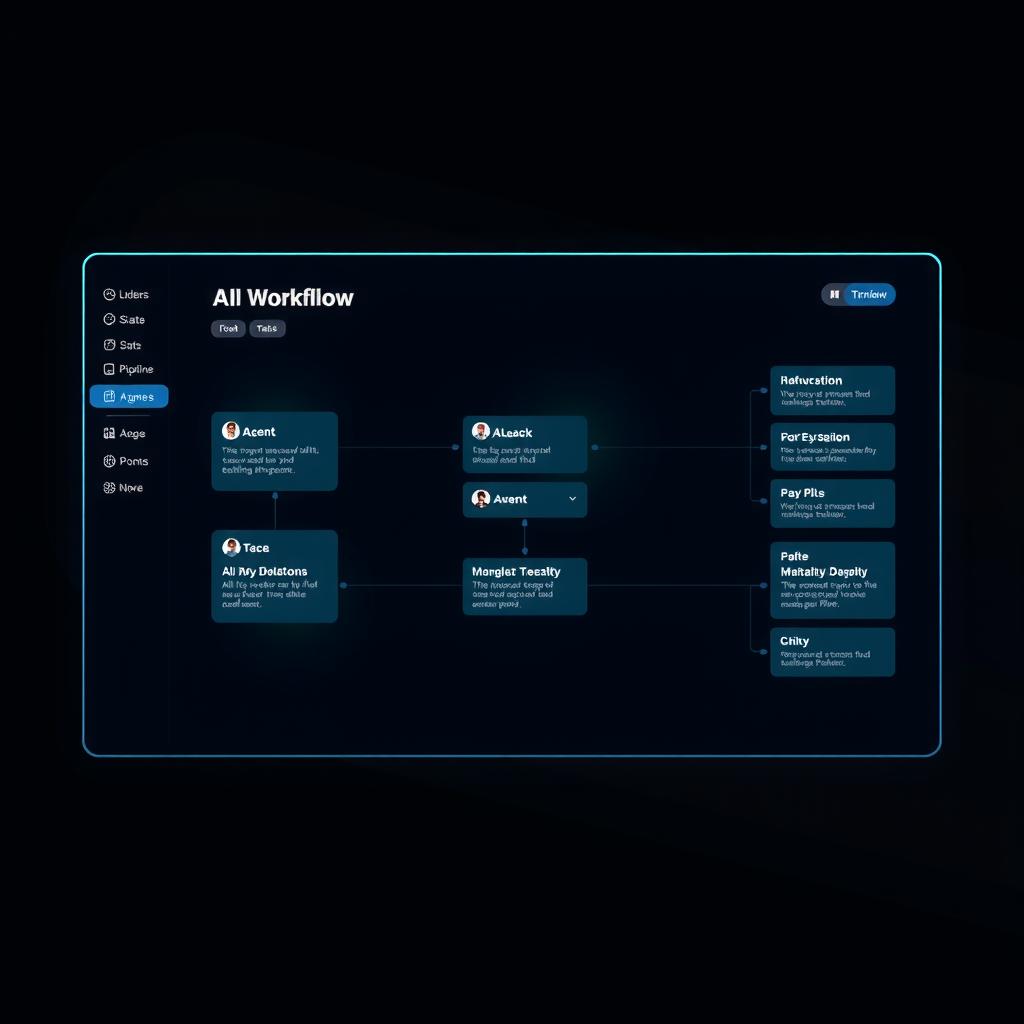
- Komo Playbook: A separate automation layer (launched January 2026) that converts SOPs into autonomous AI agents connected to Salesforce, HubSpot, Slack, etc.
- Quick Search vs. Deep Research: Two tiers of retrieval depth.
On the downside, Komo Search lacks team workspaces, saved search history, API access, and advanced collaboration features found in competitors like Perplexity Pro or You.com (ToolsForHumans). The Playbook feature, while powerful, is a distinct product and not seamlessly integrated with the search experience.
Verdict: Strong for an independent search tool. Missing team and enterprise features that would make it competitive with Perplexity AI and You.com.
Performance — 6.5 / 10
Performance is where Komo Search splits opinions. On speed, it delivers — Quick Search results appear in 2-5 seconds. On accuracy, the picture is more mixed.
Multiple reviewers note that result accuracy is inconsistent. The ToolsForHumans review warns that “result accuracy is inconsistent” and there is “limited transparency around how sources are selected or ranked.” The DemandSage comparison found that Komo “does not outperform the top AI search engines like Bing and Perplexity.”
The citation system is a genuine differentiator — the Fact-Check Sidebar shows exact quotes rather than just source links — but it places the verification burden on the user rather than performing automated validation. Perplexity Pro’s three-agent pipeline (retrieval, synthesis, verification) produces higher citation accuracy at scale (Vantaige).
Another notable quirk: because Komo does not store user data or track sessions, identical queries can return very different results on subsequent searches (HubSpot Blog). This is a feature (privacy), not a bug — but it reduces reproducibility for research workflows.
Verdict: Fast but not always reliable. Fine for exploratory research; not trustworthy enough for high-stakes or publishable work without manual fact-checking.
Documentation — 6.0 / 10
The documentation situation for Komo Search is complicated by the company’s product pivot. The main komo.ai website now positions the product as the “AI Revenue Engine” — a B2B sales automation tool. The official documentation at docs.komo.ai likewise covers the revenue engine, not the search product.
Documentation for the original search engine appears to have existed at a Mintlify-hosted subdomain (komo.mintlify.app/product/komo-search) but this URL now returns a 404. Some third-party sites like Vantaige and AIGearBase fill the gap with well-researched write-ups, but official documentation for the search product is effectively absent or deprecated.
There is no changelog, no API reference for search, and no developer documentation specific to the search engine. The Playbook/revenue engine product has thorough docs, but that is a different tool.
Verdict: Below average for a consumer tool. Users must rely on third-party reviews and trial-and-error. The product pivot has fragmented the documentation landscape.
Support — 6.0 / 10
Support channels for Komo Search are limited. The main site offers a “Start Free Trial” flow that leads into the app, but there is no visible live chat, community forum, or dedicated support portal for the search product. Users report relying on:
- The Product Hunt page for community Q&A.
- Third-party review sites for troubleshooting.
- Email support (response times are unverified).
The absence of a public knowledge base, status page, or official community is notable. For a free-tier product this may be acceptable, but paid subscribers will likely find the support options thin. The company has an active X/Twitter presence but engagement is focused on the revenue engine rather than the search product.
Verdict: Minimal support infrastructure. Free users get what they pay for; paid users may feel underserved.
Pricing
Pricing not publicly listed on the official site for the search product. The komo.ai main website now sells the “AI Revenue Engine” with plans starting at $99/month (B2B sales tool), but this is a different product.
For Komo Search, multiple third-party sources (ToolsForHumans, Vantaige, OpenTools) report the following structure, though none of these are officially confirmed on komo.ai:
- Free tier: Limited daily AI searches with basic model access.
- Basic Plan: ~$15/month — unlimited AI search, 30 Research Mode queries/day.
- Premium Plan: ~$30/month — latest AI models (GPT-4, Claude, Gemini), 300 Research Mode queries/day.
- Enterprise: Custom pricing.
The pricing listed above is crowd-sourced from third-party reviews, not verified on the official website. Check komo.ai directly or contact sales for current rates.
Pros & Cons
Pros
- ✅ Genuinely private, ad-free, and tracker-free search experience.
- ✅ Multi-model support (GPT-4, Claude, Gemini, Grok, Sunshine) — unusual flexibility.
- ✅ Six data corpora allow focused retrieval (Academic, Social, News, etc.).
- ✅ Fact-Check Sidebar shows source-level quote attribution.
- ✅ Clean, intuitive UI with a low learning curve.
- ✅ Komo Playbook offers powerful workflow automation (separate product).
Cons
- ❌ Inconsistent result accuracy; lags behind Perplexity and Bing on reliability.
- ❌ No native mobile app; web interface not mobile-optimized.
- ❌ No team workspaces, shared search history, or API for developers.
- ❌ Official documentation has been deprecated or shifted to a different product.
- ❌ Minimal customer support infrastructure.
- ❌ Identical queries can return different results due to strict no-tracking policy.
- ❌ Product identity is confusing — the main site now sells a sales tool, not the search engine.
Verdict
Komo Search occupies an awkward middle ground. It is a genuinely privacy-first, ad-free AI search engine with impressive multi-model flexibility and a uniquely transparent citation system. For casual, exploratory research — especially where privacy is paramount — it is a solid choice.
However, the product suffers from an identity crisis. The company behind it has visibly pivoted toward a B2B sales automation platform, leaving the search engine in a state of benign neglect. Documentation is outdated or missing. Accuracy trails category leaders. And the lack of mobile apps, team features, and API access limits its utility for power users.
Compared to Perplexity AI, which offers superior citation accuracy and a more mature feature set at a similar price point, Komo Search is hard to recommend as a primary search tool. It works best as a secondary, privacy-first alternative — especially for users who value zero tracking over top-tier answer reliability.
If the company ever brings the search product under the same documentation, support, and development velocity as the revenue engine, it could become a strong contender. For now, Komo Search is a promising but incomplete offering.
Recommended for: Privacy-conscious researchers, casual explorers, and users who want ad-free browsing with AI summarization.
Not recommended for: Professionals who need reliable, reproducible citations for published work; teams requiring collaboration features; mobile-first users.
📊 See how it compares → /comparisons/
Sources
- Komo AI — Official Site
- Vantaige — Komo Search: Private AI Search with Citations
- ToolsForHumans — Komo AI Review 2026
- AIGearBase — Komo AI (2026): Honest Review & Alternatives
- DemandSage — 7 Best AI Search Engines (2026)
- HubSpot Blog — 9 Best AI Search Engines for Marketers
- GeekFlare — Best AI Search Engines to Use as Google Alternatives
- Product Hunt — Komo Search Reviews
- Grokipedia — Komo (search engine)
📖 Related Reads
- ToolBrain — tool reviews, LLM comparisons, and AI workflow guides
- NiteAgent — AI agent development, frameworks, and production patterns
- NoCode Insider — AI workflow automation with no-code tools, agents, and APIs
Cross-links automatically generated from None.
Back to all posts