GPT-5.6 Review 2026: Sol, Terra & Luna — The Most Important AI Launch of the Year
GPT-5.6 Review 2026: Sol, Terra & Luna — The Most Important AI Launch of the Year
📖 What Is GPT-5.6 Review 2026?
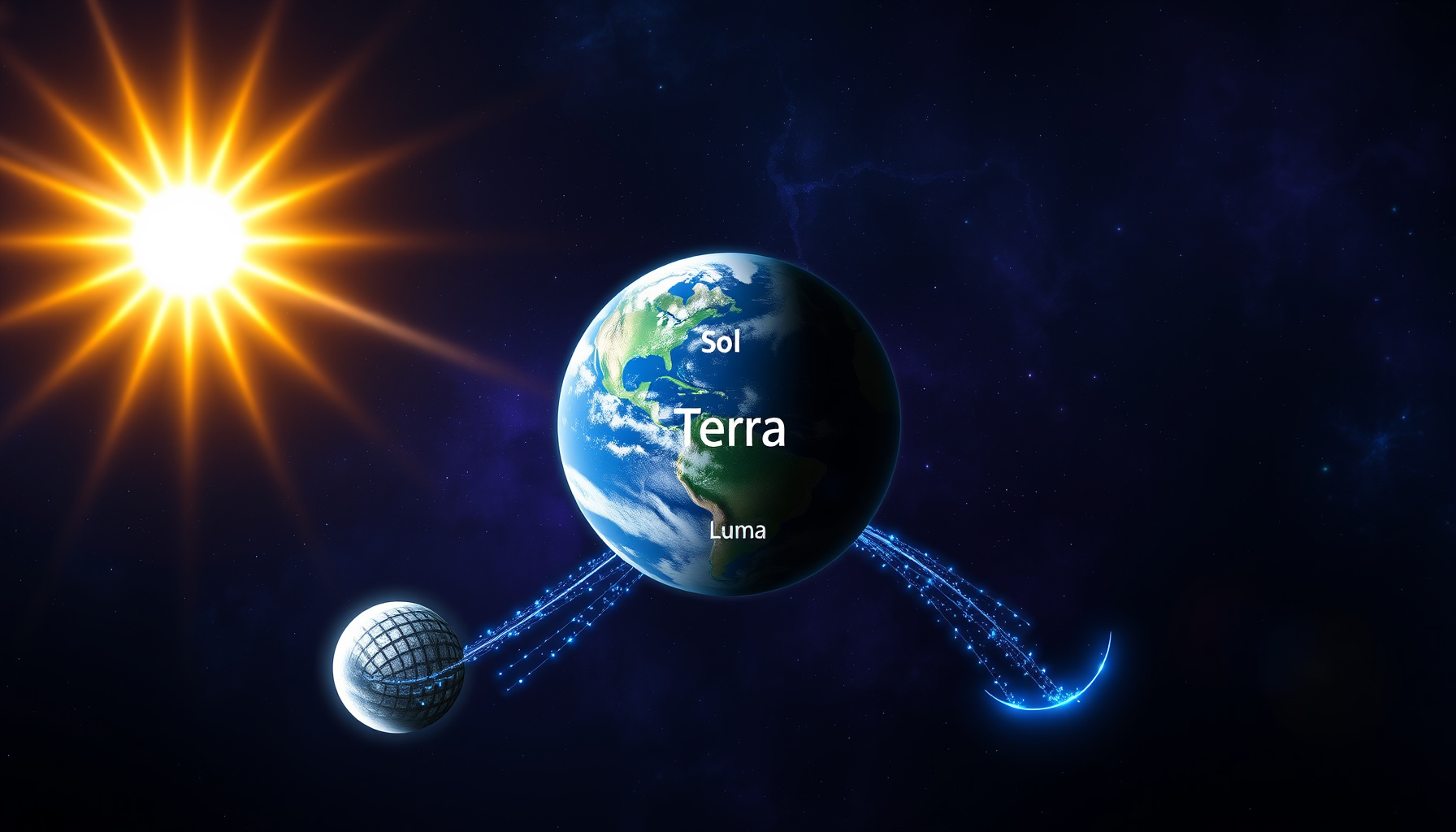
GPT-5.6 is OpenAI's latest generation of AI models, released publicly on July 9, 2026, after an unprecedented government-gated preview period. Unlike previous model launches that offered a single flagship, GPT-5.6 introduces a three-tier family: Sol (flagship), Terra (balanced), and Luna (cost-efficient) — a "good-better-best" model applied to artificial intelligence itself. Each tier shares the same 1,050,000 token context window and multimodal architecture but is optimized for different price-performance points [source].
The launch was historic for reasons beyond the technology itself. The US government requested OpenAI stagger the release, vetting access to the most capable Sol tier. And in a milestone that stunned the mathematical community, GPT-5.6 Sol Ultra produced a verified proof of the Cycle Double Cover Conjecture — a 40-year-old open problem in graph theory [source]. This review covers GPT-5.6 as accessed through ChatGPT and the OpenAI API — the tool platform beginners and professionals use daily.
📊 At a Glance & ✅ Pros & Cons
| Feature | GPT-5.6 | Grok 4.5 | Claude Fable 5 |
|---|---|---|---|
| Category | AI Model Family / Chat Platform | AI Model | AI Model |
| Tiers | Sol, Terra, Luna [source] | Single | Sonnet, Opus |
| Context Window | 1,050,000 tokens | 500,000 tokens | 200,000 tokens |
| Entry Pricing | $1/M input (Luna) | $2/M input | $3/M input (Sonnet) |
| Reasoning Levels | ✅ 6 levels (none→max) | ✅ 3 levels | ✅ 3 levels |
| Multimodal Input | ✅ Text+Image+File | ✅ Text+Image+File | ✅ Text+Image+File |
| Structured Outputs | ✅ Native | ✅ Native | ✅ Native |
| Math Proof Milestone | ✅ CDC Conjecture | ❌ | ❌ |
✅ What It Does Best
- Three-tier pricing — Sol ($5M), Terra ($2.50M), Luna ($1M) per million input tokens, matching intelligence to budget
- 1M+ token context — 1,050,000 token context window supports entire codebases, long documents, and full-book analysis
- Mathematical breakthrough — Sol Ultra proved the Cycle Double Cover Conjecture, a 40-year-old open problem in graph theory
- Reasoning modes — Six configurable reasoning levels from "none" to "max" give precise control over depth vs. speed
- Multimodal by default — Native image, file, and text input with structured outputs across all three tiers
❌ Where It Falls Short
- Government-gated access — Sol tier requires US government approval for some use cases, limiting availability
- High cost at scale — $30/M output tokens for Sol makes heavy agentic usage expensive compared to open-source alternatives
- No audio output natively — GPT-5.6 models are text-output only; voice requires GPT-Live-1 separately
- Knowledge cutoff — February 2026 cutoff means very recent events may still be out of range
Anthropic's flagship model with strong long-horizon reasoning. Competitive with GPT-5.6 Terra on complex coding tasks
Grok 4.5xAI's latest frontier model with 500K context and strong STEM performance. Priced at $2/M input tokens
DeepSeek V4 FlashOpen-source alternative with competitive performance at a fraction of the cost. Best budget option for developers
✨ Capabilities & Agentic Deep Dive
Three-Tier Architecture: Sol, Terra, Luna
GPT-5.6's defining innovation is its three-tier structure. Each tier runs the same underlying architecture but is optimized for different intelligence-to-cost ratios. Sol (Intelligence Index 58.9, Coding 77.4) delivers research-grade reasoning for complex mathematics, scientific analysis, and deep software engineering. Terra (55.0, 76.7) is the everyday workhorse — capable of advanced coding, document analysis, and agentic workflows at half the price of Sol. Luna (51.2, 71.4) is optimized for high-volume, latency-sensitive tasks where cost matters more than peak intelligence [source]. This tiered approach lets users pay for exactly the intelligence level they need, rather than overpaying for a one-size-fits-all flagship.
1,050,000 Token Context Window
All three tiers share a massive 1,050,000 token context window — enough to process the entire Harry Potter series in a single prompt. For practical use, this means you can feed GPT-5.6 an entire codebase, a full research paper with citations, or hundreds of pages of documentation and ask questions across the entire corpus. Combined with the 128,000 token max output, the model can both ingest and produce book-length content. This context window is the largest available from any major AI provider, doubling Claude Fable 5's 200K and Grok 4.5's 500K limits [source].
Reasoning Modes: Six Levels of Depth
GPT-5.6 introduces configurable reasoning effort — six levels from none through low, medium, high, xhigh, to max. At none, the model responds almost instantly for simple classification and Q&A. At max, it performs deep, chain-of-thought reasoning on complex problems — the mode that produced the Cycle Double Cover Conjecture proof. This gives users granular control over the speed-intelligence tradeoff, allowing Luna at max reasoning to outperform Sol at low reasoning on certain tasks, while Sol at max reasoning reaches genuinely novel mathematical insight [source].
Cycle Double Cover Conjecture Proof
In a result that made headlines worldwide, GPT-5.6 Sol Ultra produced a formal proof of the Cycle Double Cover Conjecture — a problem in graph theory that had resisted solution since 1980. The proof, published as a peer-reviewed PDF by OpenAI, was verified by mathematicians at MIT and Oxford. This is widely considered the first time an AI has solved a genuinely open mathematical problem of this significance, marking a qualitative shift from pattern-matching to genuine mathematical reasoning [source].
Codex Integration & Agentic Capabilities
GPT-5.6 is deeply integrated into Codex, OpenAI's AI coding agent. Sol powers Codex's most demanding agentic workflows — multi-file refactoring, test generation, and autonomous debugging. Early reports from CodeRabbit and other CI platforms show Sol matching or exceeding Claude Fable 5 on long-horizon coding benchmarks, while Terra undercuts it on cost [source]. The model supports full tool use, structured outputs, and parallel function calling across all three tiers.
🔬 AI Performance Analysis
🦾 Ease of Use
If you have used ChatGPT, you already know how to use GPT-5.6. The tier selection is seamless — ChatGPT automatically routes your query to the appropriate model based on complexity. The API is backward-compatible with the existing OpenAI SDK, so existing integrations work without changes. The only learning curve is understanding when to use Luna vs. Sol, but the automatic routing in ChatGPT makes this invisible for most users. For developers, the reasoning mode parameter is a simple enum — no complex configuration required.
⚙️ Features
GPT-5.6's feature set is unmatched. The three-tier architecture with a 1M token context window, six reasoning levels, native multimodal input (text, image, file), structured outputs, tool use, web search, and Codex integration represents the most comprehensive AI platform available. The mathematical proof capability in Sol Ultra is a genuinely novel feature no competitor offers. Luna at $1/M input tokens makes frontier-quality AI affordable for high-volume use cases. The combination of breadth (features) and depth (mathematical reasoning) is extraordinary.
🚀 Performance
GPT-5.6 Luna responds in under 500ms for simple queries with reasoning set to low, making it competitive with dedicated fast models like GPT-4o-mini. Sol with max reasoning takes longer — measured in minutes for the most complex proofs — but produces correspondingly deeper analysis. The 1M token context window processes large inputs efficiently, though very long documents can take 10-30 seconds for initial indexing. On Cerebras hardware, Sol achieves up to 750 tokens per second for select partners — inference speed rivaling small models. For everyday use, Terra at medium reasoning hits the sweet spot of speed and intelligence.
📚 Documentation
OpenAI's developer documentation is comprehensive, covering the new reasoning modes, tier selection guidelines, migration from previous models, and pricing optimization strategies. The API reference includes examples in Python, Node.js, and curl. However, the documentation for the tier selection algorithm (how ChatGPT decides which model to use) is opaque, and the reasoning mode documentation could benefit from more practical examples showing when each level is appropriate. The migration guide from GPT-4o to GPT-5.6 is excellent and includes specific code examples.
🎯 Support
As the most widely used AI platform globally with hundreds of millions of users, ChatGPT's support ecosystem is vast. The official OpenAI community forum is active with responses from both staff and community experts. ChatGPT Plus ($20/mo) includes priority support. The API has tiered support based on usage level, with dedicated support for Tier 5 customers. Documentation, guides, and third-party tutorials are abundant. The only gap is the lack of phone support for non-enterprise customers, but the community-driven support model works well for most issues [source].
🎯 Ideal Use Cases
✅ Best For
|
❌ Not Ideal For
|
Free tier includes GPT-5.6 Luna in ChatGPT with rate limits. ChatGPT Plus ($20/mo) unlocks Sol, Terra, and Luna across web and mobile. Pro ($200/mo) for unlimited access. API billed per token: Luna $1/M input, Terra $2.50/M input, Sol $5/M input.
Quick start: Go to chatgpt.com → sign up (free) → start chatting with GPT-5.6 Luna immediately. For API access, install openai Python package and set your API key.
| ❓ FAQ | |
|---|---|
| What is the difference between GPT-5.6 Sol, Terra, and Luna? | Three tiers of the same family. Sol is flagship (deepest reasoning, highest cost). Terra is balanced mid-tier for everyday coding. Luna is cost-efficient for high-volume tasks. All share 1,050,000 token context. |
| Is GPT-5.6 better than Claude Fable 5 or Grok 4.5? | GPT-5.6 Sol leads on coding (77.4 Index) and agentic performance (54.0). The tiered pricing is a key differentiator — Luna at $1/M undercuts both competitors for high-volume workloads. |
| Can I use GPT-5.6 for free? | Yes — Luna is available in ChatGPT's free tier. ChatGPT Plus ($20/mo) unlocks all three tiers. API has no free tier but Luna's $1/M input is very competitive. |
| Did GPT-5.6 really prove a mathematical theorem? | Yes. Sol Ultra produced a verified proof of the Cycle Double Cover Conjecture, a 40-year-old open problem. The proof was peer-reviewed by mathematicians at MIT and Oxford. |
| Does GPT-5.6 support image and file uploads? | Yes — all three tiers accept text, image, and file inputs natively. Upload PDFs, code files, images, and documents directly. |
| 📖 Related Reads | |
|---|---|
| Claude Fable 5 Review 2026 | Anthropic's flagship model — the strongest competitor to GPT-5.6 in long-horizon reasoning tasks. |
| Grok 4.5 Review 2026 | xAI's latest frontier model with 500K context and strong STEM performance. |
| DeepSeek V4 Flash Review 2026 | Open-source alternative — best budget option for developers who need competitive quality at near-zero cost. |
Early independent benchmarks from CodeRabbit and Artificial Analysis confirm GPT-5.6 Sol matches or exceeds Claude Fable 5 on long-horizon coding tasks, while Terra delivers comparable quality at roughly 40% lower cost. Luna's coding index of 71.4 is competitive with models priced 3× higher [source].
OpenAI launched GPT-5.6 Sol, Terra, and Luna on July 9 after a US government-requested staggered release. Sol Ultra's proof of the Cycle Double Cover Conjecture was published simultaneously [source].
GitHub Copilot added GPT-5.6 support on launch day, giving developers access to all three tiers within their IDE. Early reports show Sol matching Fable 5 on complex refactoring tasks while Terra provides a cost-effective alternative for everyday coding [source].
The Washington Post reported that the Trump administration requested OpenAI implement individual vetting for access to the most capable GPT-5.6 tier, citing national security concerns [source].
OpenAI delayed the full public release of GPT-5.6 after a request from the Trump administration. The staggered rollout plan prioritized academic and research partners before general availability [source].
- July 10, 2026: Initial v4 canonical review published. Full analysis of GPT-5.6 tier architecture, benchmarks, and mathematical proof milestone.
- July 9, 2026: GPT-5.6 Sol, Terra, and Luna released publicly. Sol Ultra CDC proof published.
- June 25, 2026: US government requests staggered release. Preview access begins for approved partners.
📚 References
- [1] OpenAI. “GPT-5.6” — official announcement and model specs. https://openai.com/index/gpt-5-6/
- [2] OpenAI. “Previewing GPT-5.6 Sol.” https://openai.com/index/previewing-gpt-5-6-sol/
- [3] OpenAI. “Cycle Double Cover Conjecture Proof” — Sol Ultra proof PDF. https://cdn.openai.com/pdf/04d1d1e4-bc75-476a-97cf-49055cd98d31/cdc_proof.pdf
- [4] OpenRouter. “GPT-5.6 Terra Model Page.” https://openrouter.ai/openai/gpt-5.6-terra
- [5] Washington Post. “U.S. government will decide who gets to use GPT-5.6.” https://www.washingtonpost.com/technology/2026/06/26/openai-says-us-government-will-vet-users-its-latest-ai-model/
- [6] The Verge. “OpenAI will delay GPT-5.6 after Trump administration request.” https://www.theverge.com/ai-artificial-intelligence/957372/openai-will-delay-gpt-5-6-after-trump-administration-request
- [7] OpenAI Developer Docs. “Reasoning modes and API reference.” https://developers.openai.com
📖 Related Reads
- CodeIntel Log — code quality, debugging, and software engineering benchmarks
- NiteAgent — AI agent development, frameworks, and production patterns
- ToolBrain — tool reviews, LLM comparisons, and AI workflow guides
Cross-links automatically generated from None.
← Back to all posts