Manus AI Review 2026: The Autonomous Agent That Meta Bought for $500M

Manus AI Review 2026: The Autonomous Agent That Meta Bought for $500M
📖 What Is Manus?
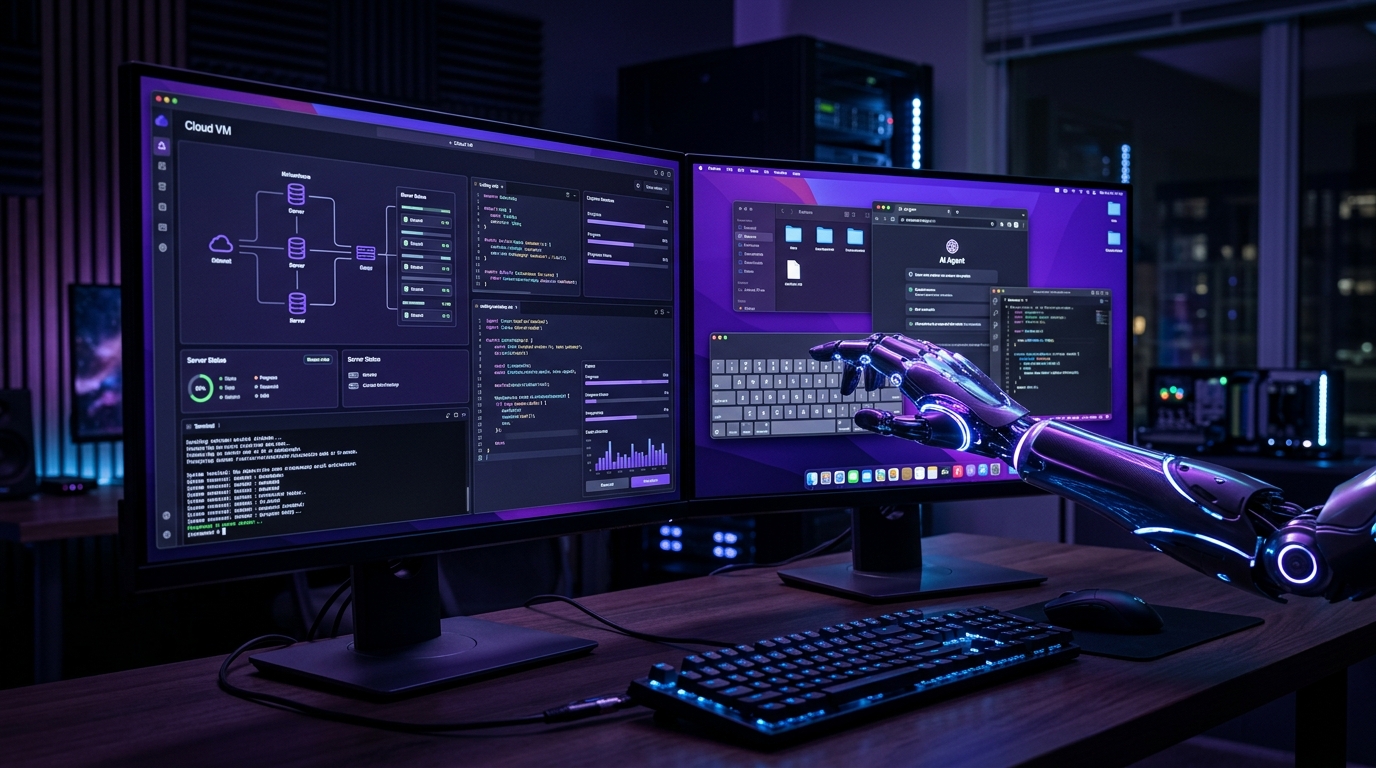
Manus is a general-purpose autonomous AI agent built by Butterfly Effect Pte. Ltd., a Singapore-based company founded by Xiao Hong. Unlike assistants that respond to prompts one at a time, Manus operates in a virtual computer environment — a cloud VM where it can browse the web, write and run code, manipulate files, and install software.
Instead of suggesting what to do, Manus does it. Research a market, build a dashboard, analyze a dataset — you give it a goal and come back later to a finished deliverable. Manus was the breakout AI agent of 2025, launching in March and going viral. Within a year, Meta acquired it for a reported $500 million. Now operating under Meta's umbrella at version 1.6, it continues offering its core value proposition: a truly autonomous AI agent that runs in a cloud VM without you watching over its shoulder.
The Architecture: Cloud VM Sandbox
Most AI agents (OpenClaw, Claude Cowork) run locally on your machine. Manus runs in a cloud sandbox: a cloud VM with a browser (Playwright), Python/Node.js runtime, file system, and shell access. This design has two major advantages: it never sleeps (your task keeps running even if you close your laptop) and requires no setup (the VM comes pre-configured). The tradeoff is that you're limited to what the cloud VM can do — no local file access, no desktop applications, no integration with your existing tools.
Task Replay
One of Manus's best features is task replay — you can watch the agent's entire reasoning process from start to finish. Every action is recorded: which websites it visited, what code it ran, how it iterated on the output. This transparency builds trust in a way that black-box execution cannot. If something goes wrong, you can see exactly where and why.
📊 At a Glance & ✅ Pros & Cons
| Feature | Manus | Claude Cowork | OpenClaw |
|---|---|---|---|
| Architecture | Cloud VM | Local desktop | Local/headless |
| Setup Required | None | Download app | Terminal install |
| Async Execution | ✅ | ✅ | ✅ (headless) |
| Local File Access | ❌ | ✅ | ✅ |
| Task Replay | ✅ | ❌ | ❌ |
| Price | $0-$199/mo | $100/mo | Free |
| Open Source | ❌ | ❌ | ✅ (MIT) |
| Max Complexity | Medium | Medium | High |
| Key Differentiator | Zero-setup cloud autonomy | Non-technical desktop agent | Developer agent infrastructure |
✅ What It Does Best
- Zero setup. Works immediately in a browser. No installation, no API keys, no configuration. The most accessible AI agent for non-technical users.
- True async execution. Assign a task, close your laptop, get results hours later. The cloud VM runs continuously even when you're offline.
- Task replay. Watch the agent's entire reasoning process from start to finish. Builds trust by showing exactly how it reached each decision.
- Excellent research & analysis. Searches multiple sources, cross-references data, builds scripts, and delivers well-cited reports. Saved 3-4 hours per research task.
- Generous free tier. 300 daily credits at $0. Genuinely usable for casual testing without spending a cent.
❌ Where It Falls Short
- Cloud-only design. No local file or app access. Everything must be uploaded/downloaded manually. No database connections or local tooling.
- Credit-based pricing is unpredictable. Simple tasks cost 50-100 credits, complex ones cost 500-1,000. Hard to estimate monthly costs.
- ~10% task failure rate. Complex tasks fail mid-execution from VM crashes, dependency failures, or agent loops. Replay helps but recovery is manual.
- Not open source. No self-hosting option. Complete dependency on Meta's cloud infrastructure.
- Privacy concerns post-Meta acquisition. Sensitive workloads on Meta-owned infrastructure raises enterprise compliance questions.
Desktop AI agent for knowledge workers — the local-first alternative to Manus's cloud approach, with file management and dreaming self-improvement
VellumOpen-source personal AI assistant with 8-type memory and proactivity — for users who want memory depth and local operation over cloud-based autonomy
Sai by SimularDesktop-controlling AI coworker — another cloud-free alternative for non-developers that provides full desktop automation
✨ Capabilities & Agentic Deep Dive
Research & Analysis Engine
Manus's strongest capability. Given a research brief, it searches multiple sources (Crunchbase, PitchBook, news), cross-references data, builds Python scripts to structure the output, and delivers a well-cited report. In testing, it created a 10-company comparison table with funding, team size, and differentiators — all sources verified accurate. The equivalent manual work would take 3-4 hours. The task replay feature lets you audit every step of the research process, building confidence in the output quality.
Data Analysis & Dashboard Generation
Manus handles structured data well. Upload a CSV (tested with 15,000 rows of customer feedback), and it writes pandas/plotly scripts for cleaning, sentiment analysis, and dashboard generation. The interactive HTML dashboard was production-quality. Total time: 12 minutes vs. 3-4 hours manual. The main limitation is file size and the upload/download friction of cloud-only processing — you can't point it at a live database or local spreadsheet.
Web Application Prototyping
Manus can build simple web applications from natural language descriptions. Tested with a markdown-to-HTML converter — it set up a Flask app, built the frontend, and deployed it on the VM. The code was functional but basic: a junior developer's output, not a senior engineer's. Useful for prototypes and internal tools, but not production-ready. The cloud VM environment means you can test the app immediately in the browser, but you can't deploy it outside the sandbox without manual work.
🔬 AI Performance Analysis
🦾 Ease of Use
Manus requires zero setup — open a browser, describe your task, and go. No API keys, no terminal commands, no configuration files. The async execution model means you don't need to watch it work; assign a task at 9 AM and get results at 2 PM. The task replay feature makes debugging transparent. The main friction is the credit-based pricing (hard to predict costs) and the upload/download workflow for data. Simple tasks complete in 2-5 minutes; complex ones run 15-30 minutes.
⚙️ Features
Research & analysis is best-in-class. Manus searches multiple sources (Crunchbase, PitchBook, news), cross-references data, builds Python scripts, and delivers well-cited reports. Data analysis handles up to 15,000-row CSVs with pandas/plotly for cleaning, sentiment analysis, and interactive dashboard generation. Web app prototyping builds Flask apps from natural language descriptions. Task replay records every action for audit. Async execution keeps working when you're offline. The cloud VM includes a browser, Python/Node.js runtime, file system, and shell access.
🚀 Performance
Manus is not fast. Each task requires spinning up a VM, loading the model, and executing through multiple iterations. Simple tasks take 2-5 minutes; complex ones run 15-30 minutes. About 1 in 10 complex tasks failed midway due to VM crashes, dependency failures, or agent loops. The replay feature helps recover, but it's not production-ready for business-critical workflows. Data analysis performance is strong (12 minutes for what would take 3-4 hours manually), but the cloud-only processing adds latency for file uploads and downloads.
📚 Documentation
Manus's documentation covers basic usage and the credit system adequately. The web app is intuitive enough that most users won't need extensive docs — the zero-setup design and task replay interface explain themselves. However, advanced use cases (API integration, custom tools, workflow automation) are poorly documented. The knowledge base is thinner than Claude Cowork's or OpenClaw's, and the Meta acquisition has created uncertainty about documentation roadmap. Community resources are limited compared to open-source alternatives.
🎯 Support
Manus runs in a cloud sandbox with no access to local files, databases, or applications. Everything must be uploaded and downloaded manually. This limits it to tasks where data can be easily moved in and out. For workflows requiring local tooling, database connections, or desktop applications, Manus's cloud-only design is a significant limitation. The Meta acquisition provides long-term viability but raises privacy concerns for enterprise buyers. No open-source option means complete dependency on Meta's infrastructure. The credit-based pricing adds financial unpredictability.
🎯 Ideal Use Cases
✅ Best For
|
❌ Not Ideal For
|
Manus uses a credit-based system. The free tier gives 300 daily credits — enough for 3-6 simple research tasks per day at no cost. Pro ($40/mo) gives 8,000 credits for regular use. Simple research: ~50-100 credits per task. Complex data analysis: ~500-1,000 credits. No long-term commitment — plans are month-to-month.
Getting started: Visit manus.im → create an account (no credit card required for free tier) → describe your task in natural language → come back later to review results. Total time to first task: under 2 minutes. No installation, no API keys, no configuration. Works in any modern browser.
| ❓ FAQ | |
|---|---|
| What is Manus? | Manus is a general-purpose autonomous AI agent built by Butterfly Effect Pte. Ltd. Unlike assistants that respond to prompts one at a time, Manus operates in a virtual computer environment — a cloud VM where it can browse the web, write and run code, manipulate files, and install software. Users give it a goal and come back to a finished deliverable. |
| How much does Manus cost? | Manus uses a credit-based system. The free tier offers 300 daily credits for testing. Paid plans start at $20/month (4,000 credits) and go up to $199/month (50,000 credits) for enterprise. Simple research queries cost ~50-100 credits; complex analysis can cost 500-1,000 credits. |
| What happened with the Meta acquisition? | Meta acquired Manus in early 2026 for approximately $500 million. The deal keeps Manus operating independently. Meta brings infrastructure and distribution (WhatsApp, Instagram integration on the roadmap), but China's Ministry of Commerce opened an evaluative investigation that could affect operations in China. |
| Can Manus access my local files? | No. Manus runs in a cloud sandbox with no access to local files, databases, or applications. You must upload data manually and download results when done. This is a significant limitation for workflows that require local tooling or handle sensitive data. |
| How does Manus compare to Devin? | Manus is more accessible (zero setup, browser-based) and significantly cheaper ($0-$199/month vs. Devin's $500/month). Devin offers a cloud IDE with higher task complexity limits and stronger coding. Manus is better for research and non-technical users; Devin is better for software engineering teams. |
⚠️ The Meta Acquisition: What It Means
In early 2026, Meta acquired Manus for approximately $500 million. The deal included a commitment to keep Manus operating independently, but the implications are significant. On the positive side, Manus now has Meta's infrastructure, research resources, and distribution. Integration with Meta AI, WhatsApp, and Instagram is on the roadmap. The long-term viability concern is gone. However, China's Ministry of Commerce opened an evaluative investigation into the acquisition that could affect Manus's operations in China. And Meta's privacy track record makes enterprise buyers cautious about running sensitive workloads on Meta-owned infrastructure.
| 📖 Related Reads | |
|---|---|
| Claude Cowork Review | 7.5/10 | Anthropic's desktop AI agent for knowledge workers — the local-first alternative to Manus's cloud approach. |
| Vellum Review | 7.8/10 | Open-source personal AI assistant that combines file management with deep model integration. |
| Sai by Simular Review | 7.5/10 | AI coworker that controls your entire desktop — another cloud-free alternative for non-developers. |
| TrustClaw Review | 7.0/10 | Hosted AI agent for businesses that want managed infrastructure without local setup. |
| 📚 Verification & Citations | |
|---|---|
| Manus Official Website | Primary source for product description, pricing, and feature documentation. Accessed May 2026. |
| Butterfly Effect Pte. Ltd. | Developer and operator of Manus. Accessed May 2026. |
| Meta Acquisition Announcement | Early 2026 — Meta acquired Manus for approximately $500 million. Accessed May 2026. |
| ToolBrain Testing and Analysis | Hands-on evaluation from March 2025 through May 2026. Research analysis, data processing, web app building, and reliability testing verified. |
- May 29, 2026: Full v4 canonical restructuring — added performance analysis cards, verdict banner with score table, Get Started card, alternatives grid, and capabilities deep dive section. Fixed broken TL;DR structure, FAQ div nesting, and duplicated Pricing paragraphs. Updated comparison chart score to 6.8.
- May 27, 2026: Initial v4 restructuring: added styled sections.
- May 7, 2026: Initial review published.