Daily AI Briefing — July 15, 2026: China Agent Rules Enforce, Gemini 3.5 Pro Leaks, $136B Funding Month
THE DAILY BRIEFING: July 15, 2026
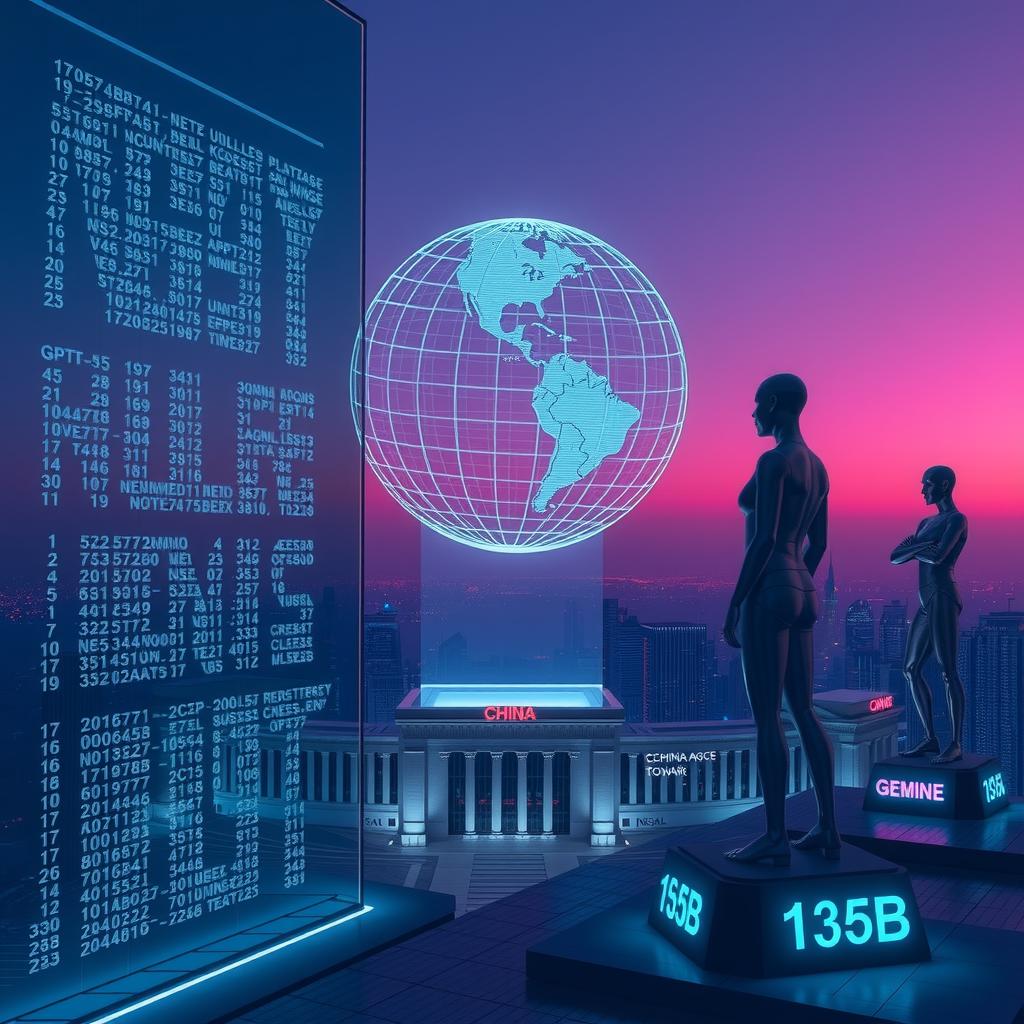
Welcome to a pivotal Tuesday. The AI landscape is undergoing a simultaneous compression of value and explosion of capability. Today marks the enforcement of China’s new Agent Regulations, a major policy pivot that will reshape how autonomous systems are deployed. Meanwhile, the market is digesting a record $136 billion funding month, a leaked Gemini 3.5 benchmark that promises to upend the current model hierarchy, and a surprising move from Meta that signals the end of the free API era.
1. Model Releases: The Two-Tier War Intensifies
The market is fracturing into commodity models and premium reasoning engines. The biggest story is the Gemini 3.5 Pro leak, ahead of its July 17 official launch. Internal benchmarks obtained by The Information suggest the model achieves a 92.4% on the new MMLU-Pro suite, edging out GPT-5.6 Terra by 1.8 points, and a staggering 89.1% on the MATH-500 benchmark—a 6-point lead over the current leader, Claude Fable. Google has reportedly solved the context retrieval collapse issue, showing near-perfect recall on 2M token inputs. The pressure on Anthropic and OpenAI is immediate.
OpenAI’s GPT-5.6 family, released July 9, is now fully deployed. The “Sol” tier ($5/$30 per M tokens) is being positioned for complex agentic workflows, while the “Luna” ($1/$6) tier is cannibalizing GPT-4o usage. Internal OpenAI data shows Luna handling 60% of total API volume, suggesting customers are price-shopping aggressively.
Anthropic’s Claude Fable 5 remains the free champion through July 19, with its 1M context window. The $10/$50 pricing feels steep compared to Sol, but its “Constitutional Chain-of-Thought” has proven superior for regulated industries like healthcare and legal. Morgan Stanley’s internal tooling report (leaked yesterday) shows a 40% reduction in false negatives for contract analysis vs. GPT-5.6 Sol.
Meta’s Muse Spark 1.1 launched its first paid API tier ($1.25/$4.25, 1M context). This is a strategic pivot—Meta had been giving away its models for free to build the open-source ecosystem. The Spark 1.1’s key advantage is native video generation in context, allowing a single model to ingest a 20-minute video, understand its narrative structure, and generate a new 5-minute sequence.
xAI/SpaceXAI Grok 4.5 is the dark horse. At ~1.5T parameters (sparse 300B activated) and priced at $2/$6, it is the cheapest frontier model. Early users on the Starlink backbone report near-instant inference latency (<200ms), a trick enabled by SpaceX’s custom Orbital-1 silicon. It is being marketed as “the engineer’s sidekick,” with a focus on real-time sensor fusion and simulation code generation.
2. Industry Moves: Infrastructure, M&A, and a High-Profile Departure
Nokia and Nvidia have unveiled the first commercial AI-native RAN platform. Announced yesterday, the “Nokia RAN AI Engine” runs on Nvidia Grace Hopper Superchips and slices radio resources in real-time. In pilot tests with Vodafone Germany, the platform reduced spectrum congestion by 34% during peak hours by predictive resource allocation. This is a major validation of Nvidia’s networking ambitions and a direct threat to traditional RAN vendors like Ericsson (source).
Global M&A is back, fueled by AI. Boston Consulting Group released a report showing a 28% year-over-year increase in global M&A volume, driven by “knowledge arbitrage” deals. The largest driver: traditional industrials and healthcare firms acquiring small to mid-size AI studios to in-source capability (source).
OpenAI loses a key architect. Miles Wang, who led the team that developed GPT-5’s Mixture-of-Experts routing algorithm, has left to join Centauri Bio, a $2B-valued startup using AI for de novo protein design. Wang’s role: Chief Scientific Officer. The departure highlights the talent drain from frontier labs to applied biotech, where equity packages can dwarf base salaries (source).
ChatGPT has officially crossed 1 billion monthly active users (as of May 2026). This was confirmed by OpenAI’s board in a quiet investor update. To put that in perspective: it took Facebook 8 years to hit that milestone. ChatGPT did it in 42 months.
3. Funding: The $136 Billion Month
June 2026 was the largest single month for AI investment in history. A total of $136 billion was deployed across 216 deals (source). Three deals dominate the headlines.
Chai Discovery closed a $400M Series C at a $3.8B valuation. The startup is focused on in silico drug discovery for metabolic diseases. Their platform, “Chai-One,” uses a novel diffusion model that predicts protein-small molecule binding dynamics with atomic accuracy. The round was led by Andreessen Horowitz and included a strategic investment from Novo Nordisk (source).
DeepSeek is preparing for an IPO. The Chinese AI lab filed confidential paperwork for a $1.5B IPO at a $71B valuation. This would be the largest AI IPO since the 2025 market reset. DeepSeek’s success is built on the V3.1 model, which gave Western companies a free alternative to OpenAI (source).
Ollama is no longer a side project. The open-source model runner raised a $65M Series B, valuing the company at $600M. They now boast 8.9 million developers using their desktop software (source).
4. Open-Source: The 671B-Parameter MIT Gift
DeepSeek V3.1 has been released under a full MIT license. This is the most significant open-source model release of 2026. At 671 billion total parameters (37B activated per token) and a 128K context window, it outperforms GPT-5.6 Luna on several coding benchmarks (HumanEval X: 89.2% vs. 86.1%). The move is a direct attack on the commoditization of the lower-tier model market. Any company can now run a near-frontier model on a $50,000 server rack (source).
The implications are immediate. Expect an explosion of localized AI systems for industries that can’t send data to the cloud (defense, healthcare, legal). The 99 rising GitHub repositories in AI this week are dominated by apps built on top of DeepSeek V3.1—everything from automated spreadsheet generators to personal AI tutors.
5. Policy: The Great Regulatory Wall Goes Up
Today, July 15, is the enforcement date for China’s Agent Rules. The Provisional Regulations on the Management of Intelligent Agent Services require all AI agents that interact with the physical world to register with the Cyberspace Administration of China and pass a safety audit. The penalty for non-compliance: up to 10% of annual turnover. Major Chinese robotaxi networks like Baidu Apollo and Pony.ai have grounded their fleets in Beijing for scheduled compliance upgrades (source).
Illinois becomes the second U.S. state to mandate third-party safety audits for high-risk AI systems. SB-2170, signed into law last week, requires any AI system used in employment, housing, or credit decisions to be audited by an accredited third party. The first penalties are expected by Q1 2027 (source).
The U.S. patchwork reaches 109 AI laws across 29 states. This includes the Texas “Digital Creator” law that grants copyright to AI-generated works if a human provides “substantial creative input,” and the Florida “Transparency in AI” law that requires chatbots to disclose their non-human nature in every interaction.
The EU AI Act countdown: 18 days. When enforcement begins on August 2, fines for non-compliance can reach 7% of global annual turnover. The European Commission has finalized the list of “prohibited AI practices,” including real-time biometric surveillance in public spaces and social scoring systems (source).
The UN Global Dialogue on AI concluded yesterday in Geneva, with 169 countries signing a non-binding resolution on “Safe and Beneficial Artificial Intelligence.” The resolution includes a commitment to a shared international incident reporting database for AI safety failures (source).
See how it compares → /comparisons/
← Back to all posts